
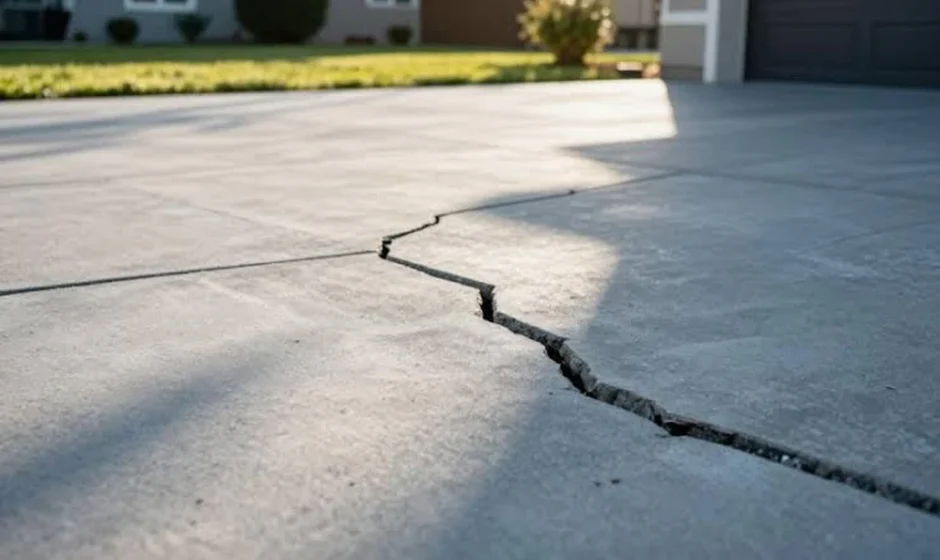

The Hidden Cost of a Few Hairline Fractures
Most homeowners assume a cracked driveway or walkway is purely a cosmetic issue, something to fix eventually when the budget allows or when guests start noticing. That assumption feels reasonable on the surface since a hairline crack rarely looks threatening. It does not bow under footsteps or buckle under a car’s weight, so the mind files it under minor imperfections rather than structural warnings.
The reality is less forgiving. Asphalt and concrete surfaces expand and contract with temperature swings, and water finds its way into even the narrowest openings. Once moisture settles beneath the surface, freeze-thaw cycles turn small cracks into larger fissures, and what started as a cosmetic flaw becomes a foundation problem. Homeowners who wait often discover that a five-dollar tube of sealant used two years earlier could have prevented a four-figure repair bill.
What Years of Pavement Repairs Actually Reveal
Contractors who spend their careers repairing driveways, parking lots, and private roads see a consistent pattern: the properties that age well are rarely the ones with the newest asphalt. They are the ones with the most consistent maintenance schedules. A driveway poured a decade ago but sealed every year or two often outperforms a driveway poured last year and left untouched. The surface material matters less than the attention it receives after installation.
This is where the value of hiring a qualified asphalt crack sealing contractor becomes clear rather than optional. Rocky Mountain Striping has documented cases where a single season of neglected cracking led to subbase erosion, a problem that costs significantly more to correct than routine sealing ever would. Hiring an asphalt crack sealing contractor at the first sign of surface cracking tends to be the difference between a quick maintenance visit and a full excavation project a few years later. The data from repeated service calls backs this up: properties on a consistent sealing schedule report fewer deep structural repairs over a ten-year span compared to those that only address damage after it becomes visible from the street.
Weather patterns play a role too. Regions with sharp seasonal swings, particularly those with cold winters and hot summers, put more stress on pavement than climates with mild, steady temperatures. Crews working in mountain states see this firsthand every spring, when winter’s freeze-thaw cycles reveal exactly which driveways held up and which ones did not. The ones that held up almost always had some form of proactive crack maintenance in their recent history.
Building a Maintenance Routine That Actually Protects Your Investment
Translating this evidence into action does not require a complicated plan. A homeowner or property manager can walk the perimeter of a driveway or lot twice a year, ideally in spring and fall, looking specifically for new cracking along seams, edges, and areas where tree roots or drainage patterns put extra strain on the surface. Catching these early means sealing can happen before water intrusion turns a surface issue into a subsurface one.
Timing also matters more than people expect. Sealant applied during the wrong temperature window, either too hot or too cold, will not bond properly and may need to be redone within a year. Professional crews track seasonal conditions closely for this reason, scheduling work during the window when the asphalt is pliable enough for proper penetration but not so hot that the material sets unevenly. This kind of timing knowledge is harder to replicate with a DIY approach, which is part of why professional sealing tends to last longer than store-bought fixes.
Budgeting for small, regular maintenance instead of waiting for a single large repair also changes how a property owner experiences the expense. Spreading the cost across smaller annual or biannual visits is far easier on a budget than absorbing a full resurfacing bill after years of deferred care. Property managers overseeing multiple lots have found that building crack sealing into a standing maintenance contract, rather than treating it as a reactive call, keeps costs predictable and keeps pavement looking presentable year-round.
None of this requires special equipment or technical know-how on the homeowner’s part. It requires attention and a willingness to treat small cracks as the early warning signs they actually are. Pavement, like most parts of a home, rewards consistent care far more than it rewards occasional intervention, and the owners who understand that distinction tend to spend less money over the life of their driveway while enjoying a cleaner, safer surface the whole time.