
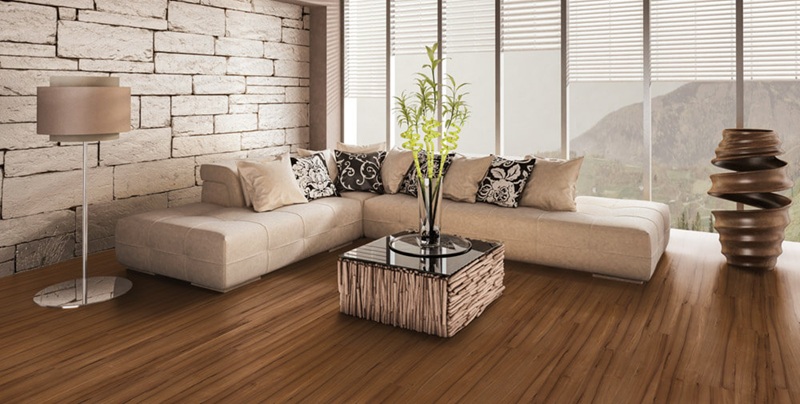

There is a particular quality of light that falls across Burmese Teak Parquet Flooring in the late afternoon, the way it catches the grain and turns each individual block into something that feels less like a building material and more like a record of time. For decades, this flooring type has held a quiet but significant place in Singapore’s residential and commercial interiors, valued not for any trend it embodies but for qualities it has always possessed: exceptional durability, deep natural beauty, and a resilience to tropical conditions that few materials can match.
What Is Burmese Teak Parquet Flooring?
Burmese teak parquet is made from solid teak timber sourced from the forests of Myanmar, long regarded as producing some of the finest teak in the world. The term parquet refers to the arrangement of the timber, small individual blocks or strips laid in geometric patterns, most commonly herringbone or basketweave, to create a floor that is as much about composition as it is about material.
What distinguishes Burmese teak specifically is the density and oil content of the timber. Teak grown in this region develops a high concentration of natural oils over decades of slow growth. Those oils are not incidental to the wood’s performance. They are the source of its remarkable resistance to moisture, insects, and the kind of dimensional movement that causes lesser timbers to warp and split in humid climates.
In Singapore, where humidity rarely retreats below 70%, that characteristic matters enormously. Burmese Teak Parquet Flooring does not simply tolerate the tropical climate. It is genuinely suited to it in a way that few other solid timber options can claim.
Key Features of Burmese Teak Parquet
The features that have sustained the reputation of teak parquet flooring over generations are not the product of marketing. They emerge from the physical properties of the timber itself:
Natural oil content
The high concentration of teak oil makes the timber inherently resistant to moisture absorption, insect damage, and surface degradation without requiring heavy chemical treatment.
Hardness
Burmese teak rates well on the Janka hardness scale, making it resistant to surface denting and wear under regular foot traffic.
Distinctive grain
The straight, tight grain of quality Burmese teak produces a floor with visual consistency and warmth. The natural golden-brown tone deepens and enriches with age and exposure to light.
Dimensional stability
Even as a solid timber product, teak’s density and oil content limit the seasonal movement that causes gaps and ridges in less stable species.
Pattern versatility
The parquet format allows for a range of geometric arrangements, from the classic herringbone to more intricate basketweave and brick-bond patterns, giving designers considerable latitude.
Durability: What Decades of Use Reveal
If there is one thing that sets Burmese teak parquet flooring apart from the broad field of timber flooring options available in Singapore, it is longevity. This is not a floor that needs replacing on a renovation cycle. In properties across Singapore, teak parquet floors installed in the 1960s and 1970s are still in active use today, often with nothing more than periodic sanding and refinishing to restore their surface.
That durability is not accidental. It is structural. The density of the timber means it resists the indentations and surface wear that accumulate in softer woods over years of use. The natural oils provide ongoing protection against moisture at a material level. And the parquet format, with its interlocking block structure, distributes stress across the floor in a way that reduces the risk of individual pieces lifting or cracking under load.
For Singapore’s commercial environments, including hotels, heritage shophouses, and institutional buildings, the durability of teak parquet has made it a recurring specification in spaces where the floor must perform under sustained and heavy use without becoming a recurring cost.
Value: The Longer Calculation
The upfront cost of Burmese teak parquet flooring is higher than many competing options. Solid teak commands a premium that reflects both the quality of the timber and the diminishing availability of mature Burmese teak from responsibly managed sources. For buyers accustomed to thinking in renovation cycles of five to ten years, that premium can feel difficult to justify.
But the calculation changes when the timeframe extends. A floor that lasts fifty years, requires only periodic refinishing, and adds genuine material value to a property is not an expensive floor. It is an investment with a long and measurable return.
In Singapore’s property market, teak parquet flooring is widely recognised as a feature that supports property value rather than depreciating with it. Buyers and tenants who appreciate quality materials understand what they are looking at when they see it, and they respond accordingly.
Caring for Burmese Teak Parquet
Maintaining a teak parquet floor in Singapore’s climate does not demand elaborate routines, but it does reward consistent habits:
- Sweep or vacuum regularly to prevent grit from acting as an abrasive on the surface.
- Clean with a lightly dampened mop only. Avoid standing water on the surface at all times.
- Apply a teak-appropriate oil or finish every few years to replenish the surface protection and sustain the timber’s natural lustre.
- Keep indoor humidity between 50% and 70% where possible to minimise seasonal movement.
- Sand and refinish the surface when wear becomes visible. Quality Burmese teak, with its depth of solid timber, can withstand multiple refinishing cycles over its lifespan.
Final Thoughts
Some materials hold their value because they are fashionable. Others hold it because they are genuinely good. Burmese Teak Parquet Flooring belongs firmly in the second category, a floor whose reputation has been earned across generations of use in some of Singapore’s most enduring and admired interiors.