
Spend enough time replacing garden fencing and you start to notice changes long before they become trends. One of the clearest shifts I have seen in recent years is height. More people want privacy, and for many households that now means a six-foot boundary fence. On garden fencing jobs in York, I am asked about six-foot fencing far more often than I was twenty years ago. It is not hard to understand why. Gardens are smaller, houses sit closer together, extensions overlook neighbouring plots and garden offices have turned outdoor space into somewhere people expect to use every day of the year.
But taller is not automatically better.
A six-foot fence catches more wind. It puts greater strain on posts. It can make a small garden feel enclosed. There can also be planning and boundary issues that need checking before anybody starts digging.
After decades installing and repairing fences, my view is fairly simple. Height should solve a problem. It should not be the starting point for every garden.
British gardens have changed
A lot of older housing was built with fairly generous gardens.
Walk around established parts of York and you will still find long rear gardens divided by traditional timber fencing, brick walls, hedges and old concrete posts. Some boundaries have probably been repaired half a dozen times over the years.
Modern developments tend to be different.
Plots are often tighter. Houses can overlook several neighbouring gardens. Upper-floor windows have clear views across boundaries. Add patios, raised decking and garden rooms and suddenly a four-foot or five-foot fence does not offer much privacy.
People also use their gardens differently now.
A garden used to be somewhere for the washing line, shed and perhaps a table and chairs. Today it might contain an outdoor kitchen, hot tub, office, gym, play area or expensive seating.
That changes what people expect from the boundary.
Privacy has become part of the design rather than an afterthought.
Six feet feels like the natural answer
I understand why.
If somebody searches fencing companies near me because the neighbours can see straight onto their patio, increasing the height seems obvious.
Sometimes it is exactly the right answer.
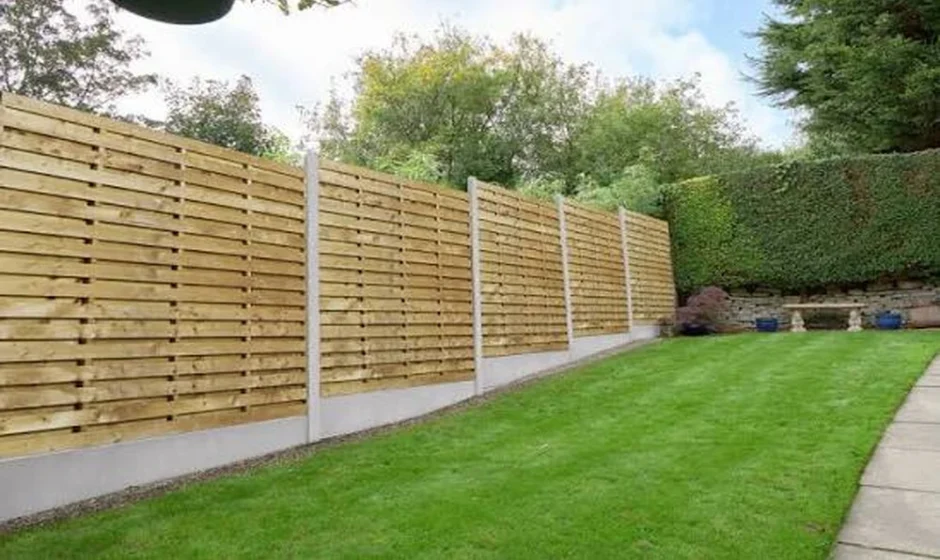
A well-built six-foot fence can give excellent privacy without making a garden feel oppressive, particularly on larger plots. Closeboard fencing works well. Good quality feather edge gives a solid boundary. Decorative panels can soften the appearance.
The problem starts when height gets treated as the only solution.
I have visited small gardens where somebody has surrounded the whole plot with tall solid panels. The privacy improved, but the garden became dark and boxed in.
There was less evening sun. Plants struggled along the boundary. Wind became turbulent rather than disappearing.
You solve one problem and create three more.
Privacy does not always require a solid six-foot wall
This is where a little thought pays off.
Suppose the problem is one upstairs window overlooking a seating area.
You might not need to raise 25 metres of fencing.
A taller section around the patio may solve it. So might a pergola, carefully positioned screening or planting behind the fence.
Slatted fencing can also break sight lines without creating such a heavy visual boundary.
Hit and miss panels are useful in exposed gardens because they provide screening while allowing some air through.
There are plenty of types of fencing, and each behaves differently.
The question should not be, “How high can we go?”
It should be, “Where is the actual privacy problem?”
That usually leads to a better job.
There is another reason tall fencing needs thought
Wind.
This gets overlooked constantly.
A solid six-foot fence presents a large surface to the wind. Multiply that across ten or twelve panels and you have a considerable load being transferred into the posts.
The panels do not need to blow out for damage to occur.
Every strong gust pushes the fence slightly. If the posts are sound, they resist it. If one post is weak, movement begins.
Then the next storm moves it a little further.
Eventually the homeowner searches fence repair near me because three panels are leaning and the gate no longer closes.
The storm gets blamed.
Often, the fence had been losing the argument for months.
York gardens can be particularly unforgiving
Local ground conditions matter.
Across York and the surrounding area you find plenty of heavy soil that retains water through wet periods. Dig into some gardens and you quickly hit sticky clay.
That creates challenges for taller fencing.
Waterlogged ground can allow poorly installed posts to move. Timber posts also need careful treatment around ground level because that is where decay often begins.
People sometimes imagine timber posts rot from the bottom upwards.
In practice, I see plenty of failures around the soil line. That area gets wet, dries, gets wet again and remains exposed to air.
Once rot starts there, a tall fence gives the weakened post plenty of leverage.
This is why I keep coming back to installation rather than appearance.
The expensive panel is not much use if the post underneath it is wobbling.
Post depth matters even more with taller fencing
For typical domestic fencing, around 600mm is a common starting point for post depth.
It is not a magic number.
An experienced fencing contractor adjusts according to height, soil, exposure, post type and the design of the fence.
Some jobs need deeper posts.
Gate posts often need more support because they carry moving loads. Exposed boundaries may need stronger posts. Soft ground may need larger foundations.
This is where choosing between fencing contractors near me based purely on the cheapest quote becomes risky.
You cannot see post depth once the job is finished.
That makes it an easy place to save labour.
Digging another 150mm into heavy clay is hard work. Removing old concrete is hard work. Carrying more concrete through a terraced house is hard work.
Yet those are often the parts of fence installation that determine lifespan.
The old fence can tell you a lot
Whenever I look at an existing boundary, I want to know why it failed.
That sounds obvious, but it is often ignored.
If the old fence leaned in one particular direction, why?
If the same three posts rotted before the others, why?
If panels repeatedly blew out at one end of the garden, what is different there?
Maybe water collects in that corner.
Perhaps wind funnels between two buildings.
There could be tree roots affecting the footing.
Sometimes the previous posts were simply too shallow.
Putting a taller fence straight back into the same holes without understanding the failure is asking for another callout.
A good fencing contractor near me should be diagnosing before installing.
Taller fencing can change the feel of a small garden
This is the design side of fencing that trade articles often ignore.
Boundaries affect how large a garden feels.
Dark, solid panels can visually pull the boundary inward. In a narrow garden, that can make the space feel smaller.
Lighter timber, horizontal lines and partial screening can have the opposite effect.
That does not mean horizontal slatted fencing suits every property. It does not. Trends come and go, and some fashionable fencing looks badly dated after a few years.
I tend to favour designs that suit the house rather than whatever happens to be popular that summer.
Victorian terrace, 1970s semi, modern townhouse and rural cottage are different buildings. Their gardens should not automatically get the same fence.
Composite fencing has changed the conversation
Composite has become much more visible in British gardens.
I can see the appeal.
There is less routine maintenance. You do not have the same rot issues as untreated timber. Colours can be consistent and the finished appearance is clean.
But taller composite fencing still needs proper structural support.
People researching fencing composite fencing cost sometimes concentrate on panel prices and forget everything underneath.
Posts, footings, gravel boards, labour, old fence removal and access all affect the real cost.
Composite is also not weightless. Nor does it somehow escape wind loading because it is modern.
I have seen expensive fencing systems installed on inadequate foundations.
They still move.
Materials cannot correct poor groundwork.
Planning rules need checking before height is decided
This is one area where I tell homeowners not to make assumptions.
Boundary fence height can be affected by planning rules, particularly beside highways, footpaths and front boundaries. Properties can also have specific restrictions.
If you are changing the height significantly, check before spending money.
Do not rely on what somebody three doors away has done.
Their circumstances may be different. Their fence might also have been installed without anybody checking anything.
From the contractor’s side, I would much rather delay a job while somebody confirms the position than build something that later has to come down.
That is wasted timber, wasted labour and a completely avoidable argument.
Neighbours are another part of the job
Fencing contractors sometimes get dragged into boundary disputes that have very little to do with fencing.
One neighbour thinks the fence belongs to them. The other disagrees.
Someone believes the old posts show the exact boundary. Somebody else produces paperwork.
Then the fencing contractor gets asked to decide.
We cannot.
If the boundary position is disputed, sort that out before fence installation begins.
Do not move a fence line because an old panel happens to lean six inches one way.
Replacing an existing boundary in the same position is normally straightforward. Moving it is a different matter.
Talk to the neighbour first if there is any doubt.
It is much easier having that conversation before twenty post holes have been dug.
Taller fencing can affect plants
This surprises people.
A six-foot fence changes shade, airflow and moisture.
Put one along a south-facing boundary and the effect may be limited. Install one where it blocks low afternoon sun and existing planting can suddenly receive far less light.
The ground near solid fencing may also stay damp longer because airflow reduces.
That matters with timber too.
I regularly see flower beds packed tightly against fencing. Soil gets piled against gravel boards. Climbers grow through panels. Ivy wraps around posts.
It looks established, but it can hold moisture against timber for months.
Leave some breathing room.
Your plants will usually manage. Your fence will certainly appreciate it.
Garden offices have pushed privacy higher up the list
This is one of the biggest changes I have noticed.
Garden rooms are everywhere now.
Some are offices. Others are bars, gyms, workshops or extra living spaces.
Once somebody starts spending several hours a day at the bottom of the garden, overlooking becomes much more noticeable.
A neighbour walking past the kitchen window occasionally is one thing. Sitting at a desk while three neighbouring houses can see directly into your workspace is another.
That is driving interest in taller fencing and screening.
It also creates practical issues.
A garden room can alter wind patterns around the boundary. Access may become tighter. In some cases, the building sits so close to the fence that replacing panels later becomes difficult.
If you are planning both projects, think about the fencing first.
I have replaced fences squeezed behind expensive garden rooms where nobody considered future access.
That is not a pleasant job.
Do not forget the gate
If the fence gets taller, the gate often gets taller too.
That means extra weight.
A six-foot timber gate hanging from an undersized post will eventually tell you exactly what it thinks about the arrangement.
It drops.
Then the latch stops lining up. The homeowner lifts the gate to close it. Hinges begin pulling. The post leans further.
Eventually something splits.
Proper garden gate installation needs support that matches the size and weight of the gate.
I generally prefer gate posts to be stronger than seems necessary.
There is little downside to a solid gate post.
There is plenty of downside to a weak one.
Repairs become more urgent on tall fencing
A loose post on a four-foot open fence deserves attention.
A loose post carrying six-foot solid panels deserves it sooner.
More surface area means greater leverage.
Push gently against the posts once or twice a year. You should not feel significant movement.
Look along the top of the fence rather than standing directly in front of it. Small changes in alignment become much easier to see.
Check after strong winds too.
If one section has started leaning, investigate it before winter.
Targeted fence repairs in York can often save an otherwise sound run. A post repair now is preferable to replacing several damaged bays after the next storm.
What does a six-foot fence really cost?
There is no useful single figure.
I know people want one, but too many factors affect the price.
Length matters, obviously.
Then there is panel type, post material, gravel boards, old fence removal, access, soil conditions, concrete, gates and changes in ground level.
Removing an old fence can sometimes take longer than installing part of the new one.
I have uncovered enormous concrete footings from previous jobs. You start digging around what looks like a normal timber post and discover somebody used enough concrete to build a small bunker.
That takes time to remove.
Narrow access changes labour too. If every panel, post and bag of material needs carrying through the house or down a long passage, the job takes longer than a driveway with direct garden access.
Good quotations account for reality rather than just multiplying the number of panels by a standard figure.
Six feet is not automatically the strongest option
This sounds obvious, but height and strength are different things.
A badly installed six-foot fence is weaker than a well-built five-foot fence.
A solid panel may provide greater privacy but suffer more wind pressure than an open design.
Concrete posts may offer longevity but create a different appearance.
Timber posts look warmer but need protection.
There is always a trade-off.
After decades working with fencing, I distrust anybody who describes one system as perfect.
Gardens are too different for that.
Sometimes lowering the fence is the smarter move
I have advised people against six-foot fencing.
That might sound strange coming from somebody who installs fences, but sometimes the garden simply does not need it.
A lower fence with trellis can provide enough screening while allowing light through.
Hit and miss boards can soften wind pressure.
Planting can screen a particular viewpoint without enclosing the entire boundary.
A mixed-height design can protect a seating area while leaving the rest of the garden open.
These solutions often look better too.
Privacy should feel comfortable, not defensive.
Autumn is a good time to make the decision
September and October tell you plenty about a fence.
Summer growth starts dying back, so hidden sections become easier to inspect. Rain exposes drainage problems. The first stronger winds reveal loose posts.
It is a useful time to walk the whole boundary.
Do not just look at panels.
Push the posts.
Check around ground level.
Look behind shrubs.
Open and close gates.
Check whether gravel boards have moved.
Stand at the patio and look towards neighbouring windows. Work out where privacy is genuinely lacking rather than assuming every boundary needs raising.
If the existing fence is already struggling, adding taller panels to weak posts is not an upgrade. It is extra load.
Fix the structure first.
Six-foot fencing probably is becoming the default choice for many British gardens, and in plenty of cases it makes sense. Our homes and the way we use outside space have changed.
But I would never specify height from a catalogue.
I would stand in the garden.
Look at the neighbours. Look at the ground. Look at where the wind comes from. Check the existing posts. See where people actually sit. Think about sunlight, planting, gates and access.
Then decide.
A fence should suit the garden it is standing in, not simply match whatever everyone else happens to be putting up that year.